How to Structure a Quest: Levels, Skills, and Pacing
The design decisions behind a Quest that motivates — chapter sizes, milestone spacing, and the arc from first lesson to mastery.
Written By Dave Hemann
Last updated About 1 month ago
A Quest is more than a list of skills - it's a motivation architecture.
The same content, structured differently, produces very different student experiences. Here's how to think about the big structural decisions.
The proven shape
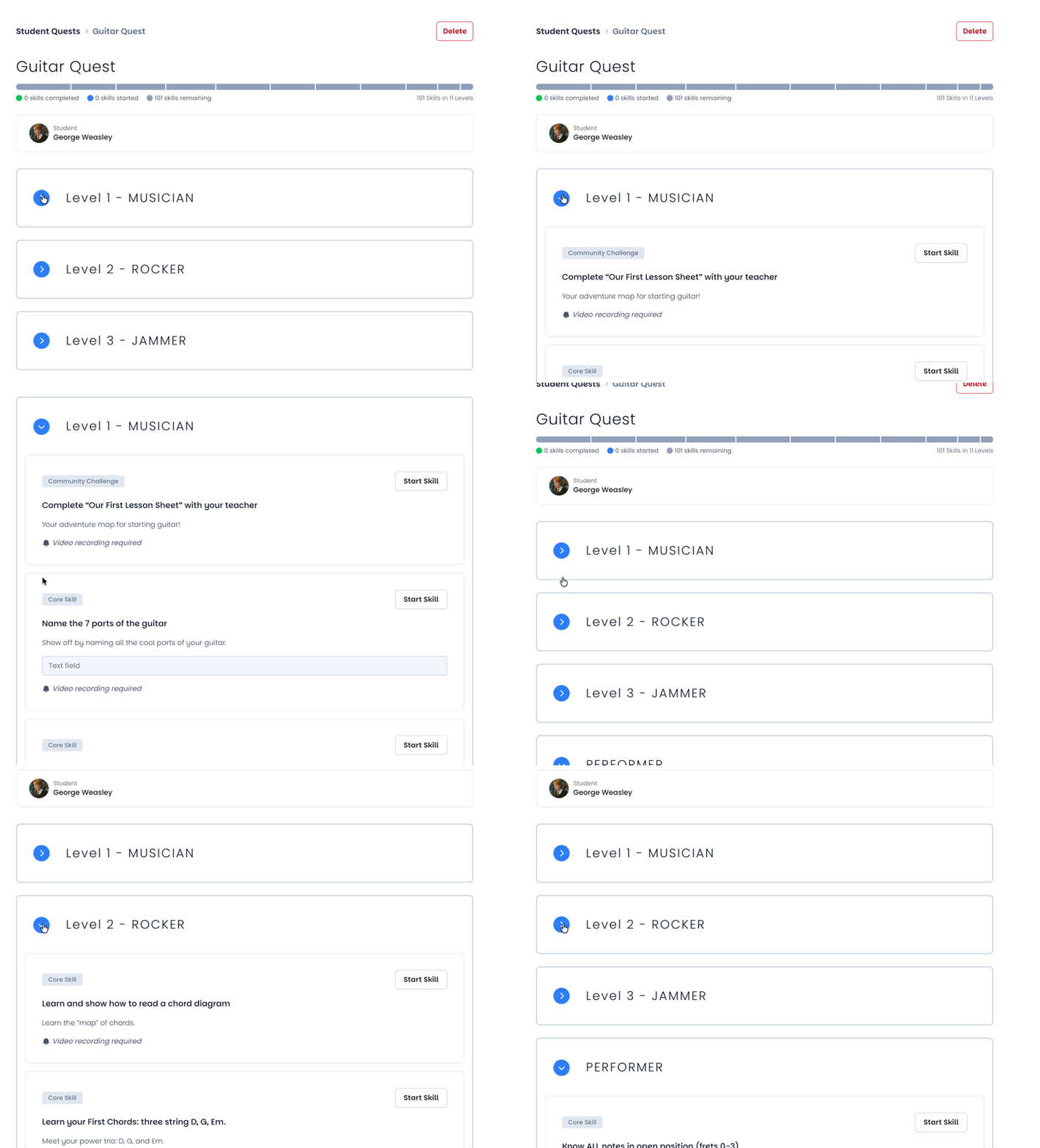
Musician Quest's ready-made instrument Quests follow a shape that works: 8-12 Levels per Quest, 5–10 Skills per Level. You're free to depart from it - the framework is fully flexible - but understand why this shape earns its keep:
5–10 skills per Level keeps milestones reachable. Fewer than 5 and Levels complete too fast to feel earned; more than 10 and the reward moment drifts so far away it stops pulling.
8-12 Levels gives the journey a real horizon - years of visible path - while keeping each chapter humanly sized.
Pacing: the first reward is the most important one
Design your early Levels so a typical beginner completes Level 1 within their first couple of months. That first front-desk moment does something no brochure can: it proves to the student and the family that the path is real and they're on it.
Front-load Level 1 with achievable, satisfying wins.
From there, Levels can gradually deepen. It's natural for Level 8 to take longer than Level 2 - students who've had six reward moments have momentum to carry them through longer chapters.
Name your Levels
"Level 3" is a number. "Level 3 · Rocker" is an identity. Named Levels give students something to be, not just something to finish - and they give families language for celebrating ("she just became a Rocker!"). Pick names that ascend meaningfully, so the ladder itself tells a story.
Sequence for momentum, not just logic
Musical pedagogy tends to sequence by theory. Quest design also weighs feel: each Level should mix quick wins with meatier skills, so there's always something in motion. A Level that opens with its hardest skill stalls students at the gate; a Level that opens with a satisfying one builds the momentum to tackle the hard one.
Short Quests are valid too - the Side Quest
Not every Quest needs 11 Levels. The Performance Quest that ships with every account is a single Level of six skills, focused on one objective. Side Quests - a summer intensive, a recital-prep sequence, an ensemble skills track - run alongside a student's main Quest and are great for special programs. (See: Side Quests: Short Journeys Alongside the Main Quest)
Design, then watch
However carefully you structure, real students will teach you where the pacing sags and which skills bottleneck. Publish, watch the Student Quests tab for stall patterns, and refine. Progress over perfection applies to curriculum too.
Was this helpful?
Still need help? Ask the team